
As the days get longer with spring’s arrival, we find ourselves wanting to spend more time outside. Our outdoor kitchens and patios become central spots for relaxing and entertaining. Good lighting can make a big difference, turning these spaces into functional and inviting areas even after the sun goes down. We’ll explore some ideas to brighten up your cooking and gathering spots, making the most of those extended spring evenings.
Key Takeaways
- Proper lighting in your outdoor kitchen area helps with cooking tasks and sets a nice mood. Think about lights for prep work and others to highlight plants or walls.
- Patio lighting is about both looks and safety. Lights along paths make it easy to walk around, and string lights add a fun vibe for parties.
- Integrating lights with outdoor paving overlays can create a clean look. You can put lights right into the pavers or use lights to show off the texture of the paving.
Illuminate Your Outdoor Kitchen Ambiance
As the days stretch out longer into spring, we find ourselves spending more time outdoors, and our kitchens are no exception. We want to make sure our outdoor cooking spaces are as inviting and functional as our indoor ones. Proper lighting is key to this transformation, turning a simple patio into a true extension of our home.
Task Lighting for Culinary Creations
When we’re chopping vegetables or flipping burgers, good light is a must. We need to see what we’re doing, plain and simple. Think about the areas where you do the most work: the grill, the prep counter, and the sink. For these spots, we recommend installing focused lighting. Under-cabinet lights, similar to what you might have indoors, can work wonders beneath overhead structures. For the grill itself, a dedicated grill light that clamps on is a game-changer. It means no more fumbling in the dark when dinner is almost ready.
- Consider adjustable spotlights that can be aimed precisely where you need them.
- Look for fixtures with a good lumen output – enough to see clearly without being blinding.
- Ensure all fixtures are rated for outdoor use to withstand the elements.
Accentuate Architectural Features
Beyond just making things visible, lighting can really make our outdoor kitchen pop. We can use lights to draw attention to interesting parts of the structure, like a stone backsplash or a stylish range hood. Small, recessed lights can be tucked into soffits or overhangs to cast a gentle glow downwards. Uplighting, placed at the base of columns or decorative elements, can create dramatic shadows and highlight textures. This kind of lighting adds depth and sophistication to the entire space.
We’ve found that a layered lighting approach works best. It’s not just about having one bright light; it’s about combining different types of light to create a mood and serve different purposes. This makes the space feel more complete and usable, even after the sun goes down.
Enhance Patio Ambiance and Safety
As the days stretch out longer into spring, we want our patios to be just as inviting and functional as our indoor spaces. Lighting plays a big part in this, making sure everyone feels comfortable and can move around safely after the sun goes down. It’s not just about seeing; it’s about creating a mood, a feeling of warmth and welcome.
Create Welcoming Pathways with Step Lights
Tripping hazards can really put a damper on an evening. We’ve found that adding small lights along steps and changes in elevation makes a huge difference. These lights don’t need to be bright; they just need to show where the edge is. Think about installing them directly into the risers of your steps or along the sides of pathways. This gives a gentle glow that guides people without being glaring. We like to use low-voltage LED step lights because they’re energy-efficient and last a long time. Plus, they come in many styles, from modern to more traditional, so you can match them to your patio’s look.
- Consider the beam angle: Lights that cast a downward or angled beam are best for pathways to avoid shining directly into eyes.
- Placement is key: Space them evenly, usually every few feet, to provide consistent illumination.
- Weather resistance: Make sure whatever you choose is built to handle the elements – rain, sun, and temperature changes.
String Lights for Festive Gatherings
There’s something about string lights that just makes everything feel more festive. Whether we’re having a casual get-together or a more planned dinner party, string lights add a touch of magic. We often hang them above the patio area, perhaps strung between posts, pergolas, or even trees. They create a canopy of light that feels cozy and celebratory. For spring evenings, a warm white light is usually best. It’s soft and inviting, perfect for lingering conversations. We’ve also experimented with different bulb styles, from classic Edison bulbs to smaller, more modern LEDs, and each gives a slightly different vibe.
String lights are a simple way to transform a patio into a delightful outdoor room. They provide ambient light that’s perfect for socializing and dining, making your outdoor space usable and enjoyable well into the evening hours.
We’ve found that using a dimmer switch with string lights is a game-changer. It lets us adjust the brightness depending on the occasion. For a lively party, we might have them a bit brighter, but for a quiet evening with a book, we can dim them down to a soft glow. It really gives us control over the atmosphere.
Integrating Lighting with Outdoor Paving Overlays
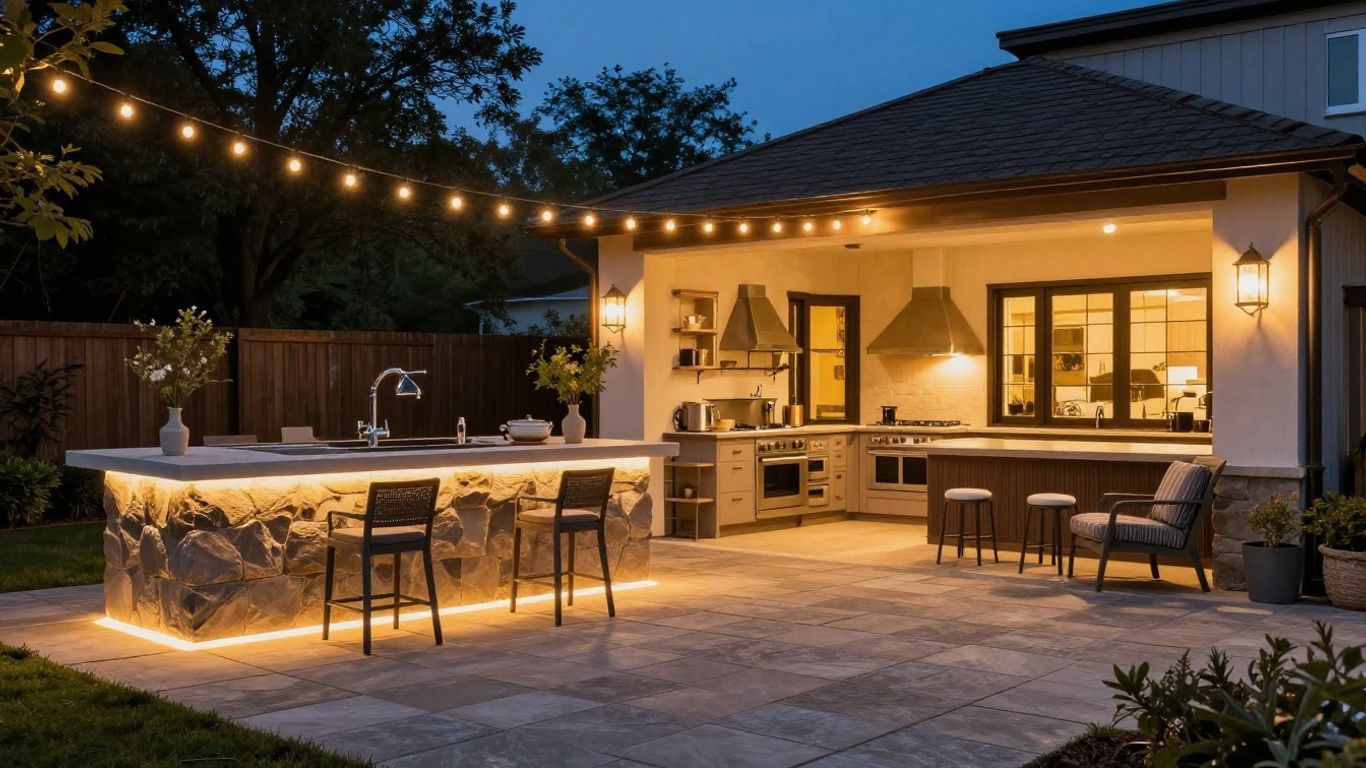
When we think about our outdoor spaces, the ground beneath our feet often gets overlooked in the lighting conversation. But integrating lights directly into your paving can really change the whole feel of your patio and kitchen area. It’s a way to add light without cluttering the space with poles or hanging fixtures. We’ve found that this approach offers a clean, modern look that works with almost any style.
Subtle Illumination Within Your Pavers
Putting lights right into the pavers themselves is a neat trick. It’s not about flooding the area with light, but more about creating a soft glow. Think about how these lights can guide people, especially after the sun goes down. They can mark the edges of a patio, define seating areas, or even highlight a particular pattern in the paving. This type of lighting is perfect for setting a mood without being too bright. We like to use them along pathways leading to the kitchen or around the main entertaining spots.
Uplighting to Highlight Paver Textures
Another way we like to use paving overlays with lighting is by using uplights. These are small fixtures placed at the base of a wall or a feature, pointing upwards. When used with textured pavers, they can cast interesting shadows and really bring out the material’s character. It adds a layer of visual interest that you wouldn’t get with just overhead lights. We’ve seen this work wonders on stone or brick pavers, giving them a more dramatic look.
Here are a few things to consider when planning this type of lighting:
- Paver Type: Some pavers are better suited for light integration than others. Solid, dense materials are usually best.
- Drainage: Make sure any lighting installation doesn’t interfere with how water drains away from your patio.
- Power Source: Plan where your electrical connections will come from. It’s easier to do this during the initial paving installation.
- Maintenance: Think about how you’ll access the lights for bulb changes or repairs down the line.
We’ve found that the best results come from planning this lighting integration early in the design process. It’s much simpler to incorporate the fixtures when the patio is first being laid, rather than trying to retrofit them later. This saves time and often money, too.
Using lights within your paving is a smart way to add both function and style. It’s a subtle touch that makes a big difference in how your outdoor kitchen and patio feel, especially as the days get longer and we spend more time outside.
Wrapping Up Our Lighting Ideas
As the days stretch out longer into spring, we hope these ideas have given you a good starting point for lighting up your outdoor spaces. We’ve looked at ways to make your kitchen and patio more inviting and functional after the sun goes down. Whether you’re aiming for a cozy vibe or need practical light for cooking and entertaining, there are options for every taste and need. Now it’s time to take these thoughts and bring them to life, making the most of those beautiful spring evenings right outside your door. Enjoy your newly lit outdoor areas!
Frequently Asked Questions
What kind of lights do we need for cooking outside?
For our outdoor kitchen, we should use lights that help us see what we’re doing, especially when preparing food. Think about lights that shine directly on the counter or grill area. These are called task lights. They make sure we can chop veggies and flip burgers safely, even after the sun goes down. We also want lights that make our kitchen look nice, like ones that highlight cool stone or brickwork.
How can we make our patio safer and more inviting with lights?
We can add lights along the edges of steps or walkways on our patio. These little lights, often called step lights, help prevent trips and falls when it’s dark. For parties or just relaxing evenings, putting up string lights can create a really fun and cozy feeling. They hang overhead and give off a warm glow, making our patio feel magical for get-togethers.
Can lights be put into our patio’s ground surfaces?
Yes, we absolutely can! Some modern paving stones or overlays have lights built right into them. These lights are low to the ground and give off a soft, gentle shine, which looks super cool and helps guide people. We can also use lights placed at the bottom of walls or plants to shine upwards onto the pavers. This makes the texture and color of the paving really stand out, adding a dramatic effect to our outdoor space.