
When we’re thinking about our pool decks, especially in places where it’s humid, we want a surface that feels good underfoot and doesn’t get dangerously slick. We’ve been looking into different ways to pave our pool areas, and the idea of using cool pool deck paver overlays seems like a smart move. These overlays can make a big difference in how comfortable and safe our outdoor spaces are, even when the weather is hot and sticky. We’ll explore what makes certain pavers work best and how to put them in so they last.
Key Takeaways
- When picking out cool pool deck paver overlays, we need to look at how well they handle heat and how slippery they get when wet. Materials that don’t soak up much sun and have a bit of texture are usually the best bet for staying cool and providing grip.
- Getting the surface ready before laying down any cool pool deck paver overlays is really important. We have to make sure the ground underneath is stable and properly prepared so the new pavers don’t shift or crack over time.
- To keep our cool pool deck paver overlays looking good and working right, we need a simple cleaning routine. Regular sweeping and occasional washing will help maintain their non-slip qualities and keep them from getting too hot.
Choosing The Right Cool Pool Deck Paver Overlays
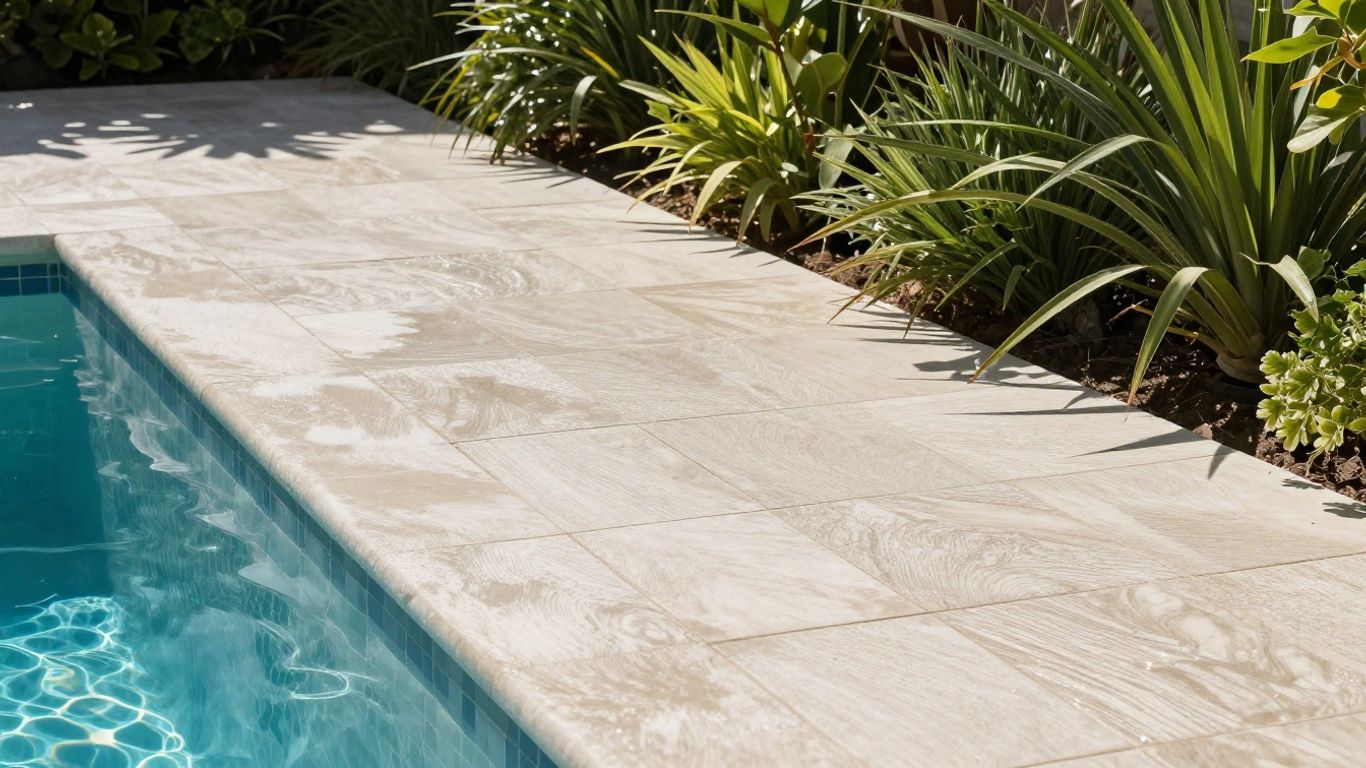
Selecting pool deck paving that stays cool and slip resistant in humid weather can feel overwhelming. There are so many options out there, and each claims to do it all. Let’s look at what really matters when picking the right overlays to keep our pool areas comfortable and safe all season long.
Understanding Material Properties For Heat Dissipation
Not all paver overlays handle heat in the same way. We want to avoid materials that trap warmth and make it impossible to walk barefoot. The type of paver really makes a difference here.
| Material Type | Heat Absorption | Typical Surface Temp | Cool To The Touch? |
|---|---|---|---|
| Natural Stone | Low | Lower | Yes |
| Concrete Pavers | Moderate | Medium | Sometimes |
| Porcelain Tile | Low | Lower | Yes |
| Rubber Overlays | Very Low | Lowest | Yes |
- Lighter colors generally reflect more heat and stay cooler in direct sun.
- Porous materials allow for moisture evaporation, helping surfaces cool off quickly.
- Some modern overlays even have special coatings designed to reflect infrared rays.
We’ve found that walking across the pool deck barefoot is the real test—if it feels comfortable, that overlay is probably doing its job.
Evaluating Slip Resistance In Humid Conditions
Slippery decks are a real hazard, especially when humidity turns the surface slick. We shouldn’t settle for anything that only looks good if it can’t keep us on our feet.
Here’s how we check for good grip:
- Surface texture: Rough or brushed finishes offer better traction than smooth ones.
- Coatings: Many overlays use non-slip additives mixed right in, which help even when the surface gets wet.
- Drainage: Overlays that let water escape prevent puddles and keep things drier underfoot.
| Overlay Option | Natural Texture | Non-Slip Coating | Drainage Ability |
|---|---|---|---|
| Travertine Stone | Yes | Optional | Good |
| Rubberized Tiles | Yes | Built-in | Excellent |
| Textured Concrete | Yes | Available | Moderate |
Safety should never be an afterthought. It’s worth testing a sample during humid days before making a final choice. No one wants a surprise slip or burn near the pool. Making this investment will keep family and guests happier and safer all summer.
Installation And Maintenance Of Slip-Resistant Paver Overlays
Proper Substrate Preparation For Durability
Getting the base right is probably the most important step for any paving project, and it’s no different for our cool, slip-resistant pool deck overlays. We need to make sure the ground underneath is solid and won’t shift. First, we’ll clear the area, removing any old concrete, grass, or debris. Then, we compact the soil to create a firm foundation. After that, we add a layer of gravel, usually about 4-6 inches deep, and compact that too. This helps with drainage, which is key around a pool. We want to avoid water pooling up under the pavers, as that can lead to problems down the road, like frost heave in colder climates or just general instability.
- We must ensure the substrate is level and stable before laying any pavers.
- Proper compaction prevents settling and cracking.
- Adequate drainage layers are vital for longevity.
Long-Term Care For Optimal Performance
Once our beautiful, cool, and safe pool deck is installed, we need to keep it looking good and performing well. Regular cleaning is a must. We can sweep away leaves and dirt, and for tougher spots, a gentle scrub with a mild detergent and water usually does the trick. We should avoid harsh chemicals, as they can sometimes damage the paver surface or affect its slip-resistant qualities over time. Periodically, we’ll want to check the joints between the pavers. If any sand or grout has washed out, we can top it up to keep the pavers stable and prevent weeds from growing in the gaps. It’s also a good idea to rinse the deck down with the hose every so often, especially after pool parties, to wash away any sunscreen or lotion residue that might make the surface slick.
Keeping the surface clean and the joints filled helps maintain both the aesthetic appeal and the safety features of your pool deck.
Here’s a quick rundown of what we should do:
- Sweep regularly to remove debris.
- Wash with mild soap and water for tougher stains.
- Inspect and refill paver joints as needed.
- Rinse the deck periodically to remove residue.
Conclusion
So, after looking at all the options for pool deck paving, we can see that picking the right materials really makes a difference, especially when it gets hot and sticky outside. We want something that keeps our feet cool and doesn’t turn into a slip-and-slide every time it rains or the kids splash around. From what we’ve found, textured concrete, cool deck coatings, and certain types of pavers seem to do the trick. It’s not always easy to choose, but thinking about our local weather and how much time we spend by the pool helps a lot. In the end, we just want a spot where everyone can relax, stay safe, and not worry about burning their toes or slipping. If you’re planning a new pool deck or updating an old one, it’s worth taking the time to pick something that works for your space and your family.
Frequently Asked Questions
How do we pick pool deck covers that won’t get too hot?
When selecting deck covers for our pool area, we should look for materials that don’t soak up a lot of sun. Some materials, like certain types of concrete or stone, naturally stay cooler. We want to find options that reflect sunlight rather than absorb it, keeping the surface comfortable for our feet even on the hottest days. Reading about how different materials handle heat is a good first step.
What makes a pool deck surface safe from slips, especially when it’s damp?
To ensure our deck is safe from slips, particularly in humid weather when surfaces can become slick, we need to consider the texture of the material. Rougher or textured surfaces provide better grip than smooth ones. Many pool deck options come with built-in anti-slip features or can be treated to increase traction. We should check for materials that are known to maintain their grip even when wet.
How often do we need to clean and maintain our cool, slip-resistant pool deck?
Keeping our pool deck looking good and working well involves regular attention. We typically recommend cleaning the deck a few times a year, or more if needed, to remove dirt and grime that could affect its cooling or gripping abilities. Simple sweeping and occasional washing with mild soap and water usually do the trick. Checking for any loose pavers or damage periodically will also help ensure it stays safe and effective for a long time.