
Status: Proposed · September 2026
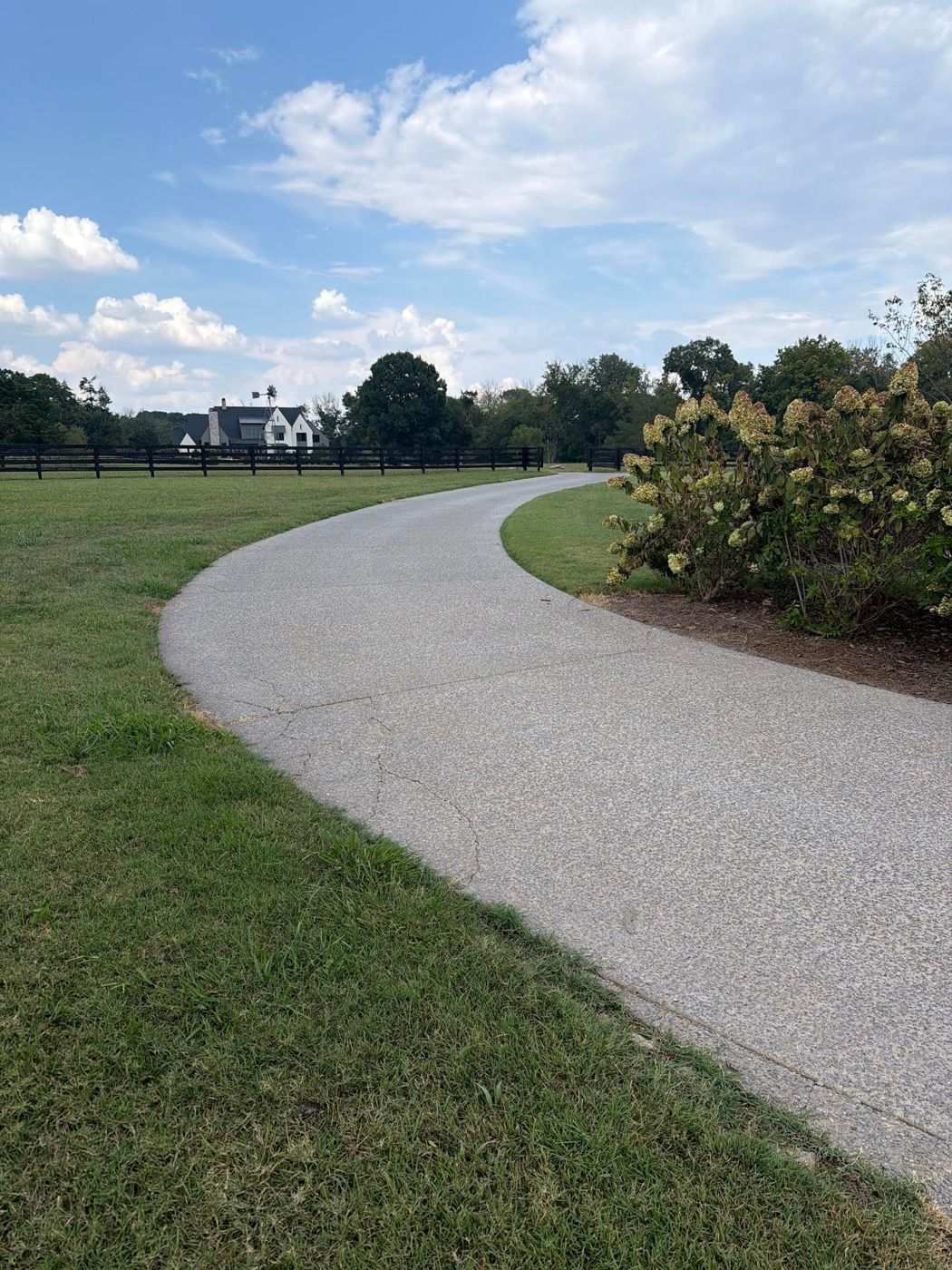
A five-year-old exposed-aggregate concrete driveway on Farmstead Lane in Franklin, Tennessee — roughly 4,850 square feet running from the neighborhood asphalt up to a three-car garage, with a wide apron toward the barn — is cracking at the corners and control joints. The slab was poured at the right thickness; it’s Middle Tennessee freeze-thaw doing what it does. The homeowner wanted pavers without paying twice for a base, so the plan is a paver overlay: the concrete stays and becomes the base, and a new paver surface goes on top.
The problem
Cracking concentrated at panel corners and along the outside edges, where the original pour had no restraint. Structurally the slab is sound — this is a surface that’s failing cosmetically, not a base that’s failing — which is exactly the condition an overlay is built for. Tearing it out would cost about as much as the pavers themselves and produce a base no better than the one already there.
Two things made this one more than a straight overlay. The garage apron is nearly dead flat, so simply adding three inches of paver and sand at the door would trap water against the garage. And the homeowner did not want an asphalt ramp where the driveway meets the neighborhood road.
What we’re building
The driveway splits into two zones with two different build stacks.
| Zone | Build stack, top to bottom |
|---|---|
| Overlay zone — about 4,850 sq ft | Existing concrete cleaned and kept as the base → 1-inch machine-sand setting bed screeded to grade → concrete pavers, mechanically installed → plastic edge restraint spiked into the ground on every open edge → polymeric sand swept and locked into the joints. |
| Excavate-and-rebuild zone — about 800 sq ft at the garage | Saw-cut the slab, remove and haul the concrete → compact the subgrade → crusher-run base compacted in lifts to hold the original fall away from the door → 1-inch sand bed → the same pavers, finishing flush with the garage slab with no lip. |
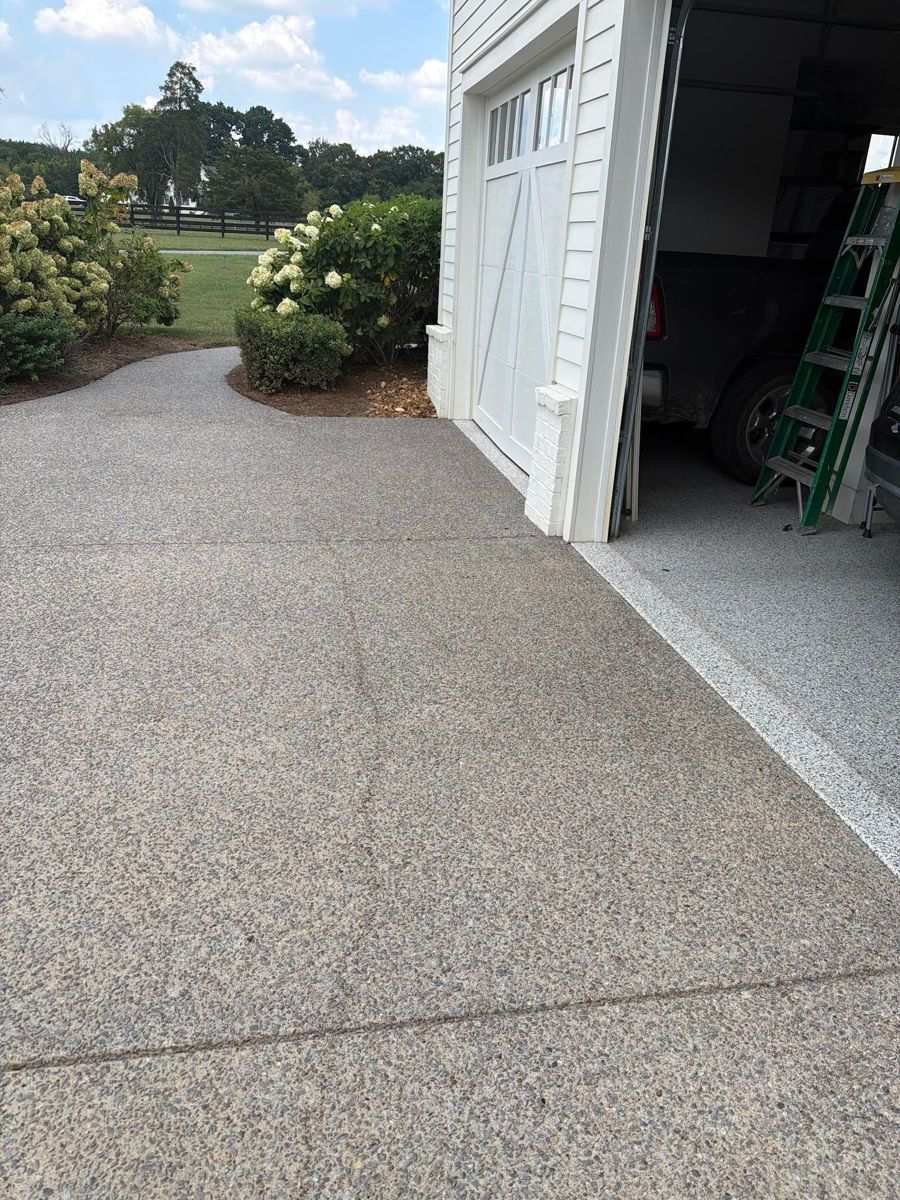
At the street end the pavers meet the asphalt at the same height — excavated and matched, not ramped. The aerial elevation profile shows the drive falling toward the road, which is what we want; a laser shot on site confirms whether any cut-back is needed there at all. A channel drain at the garage is the backup only if the grade won’t give us positive fall, and nothing about that gets decided by eye.
This system follows the published CMHA (formerly ICPI) guide specification for interlocking concrete pavement overlays — concrete pavers and bedding sand over an existing asphalt or concrete base, written for both pedestrian and vehicular use. Pavers on concrete don’t walk: the spiked edge restraint and the sand-locked joints hold the field, and the only thing that moves an overlay is tracked equipment turning on it.
Materials considered
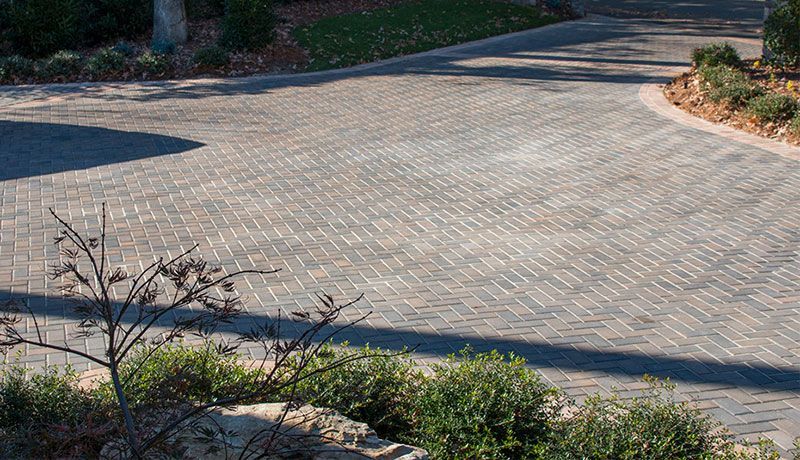
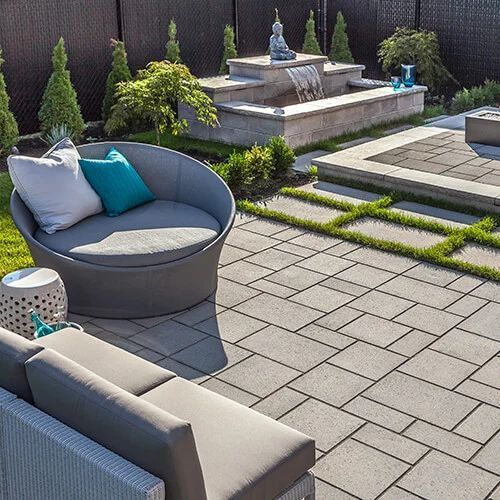
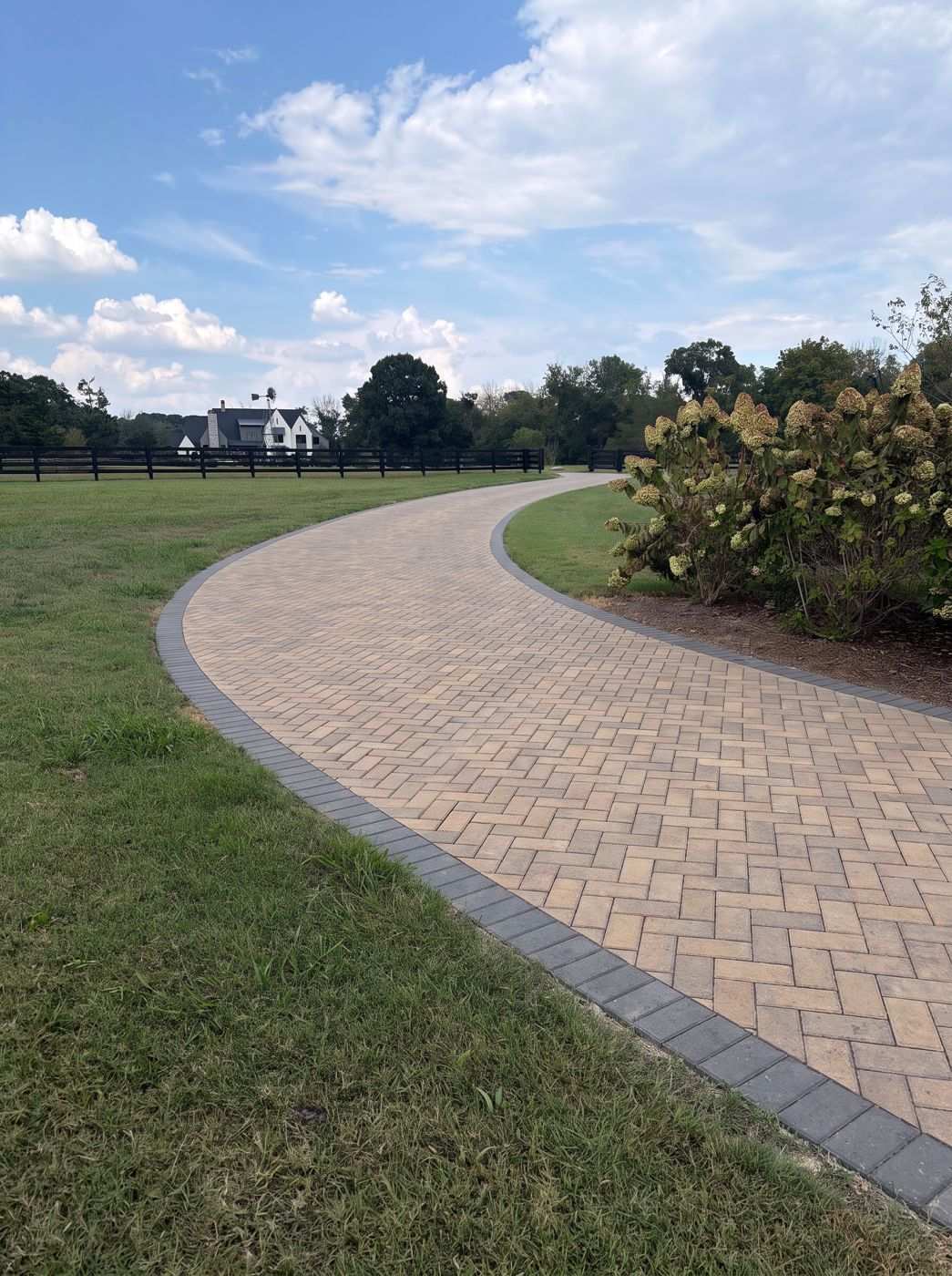
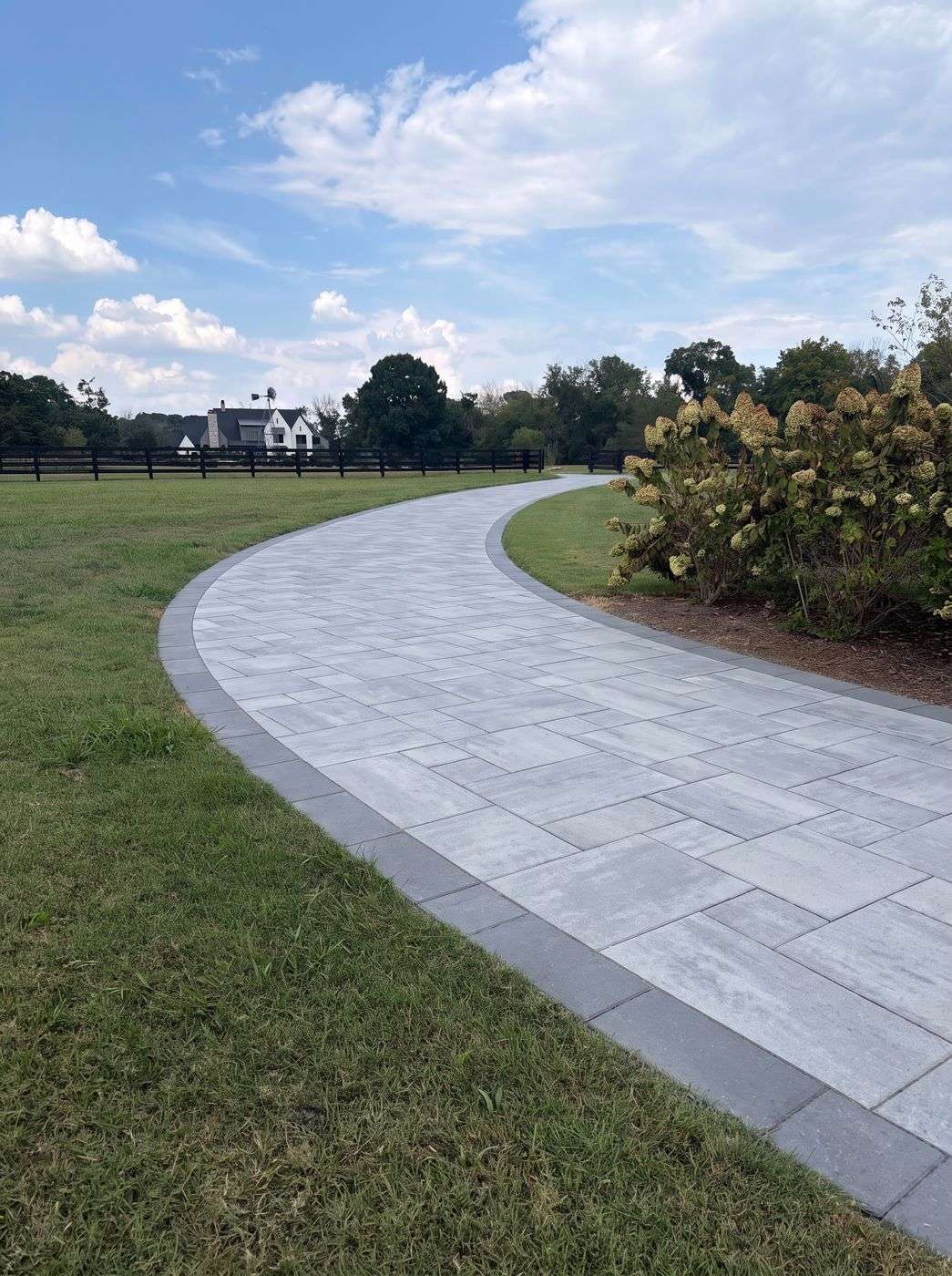
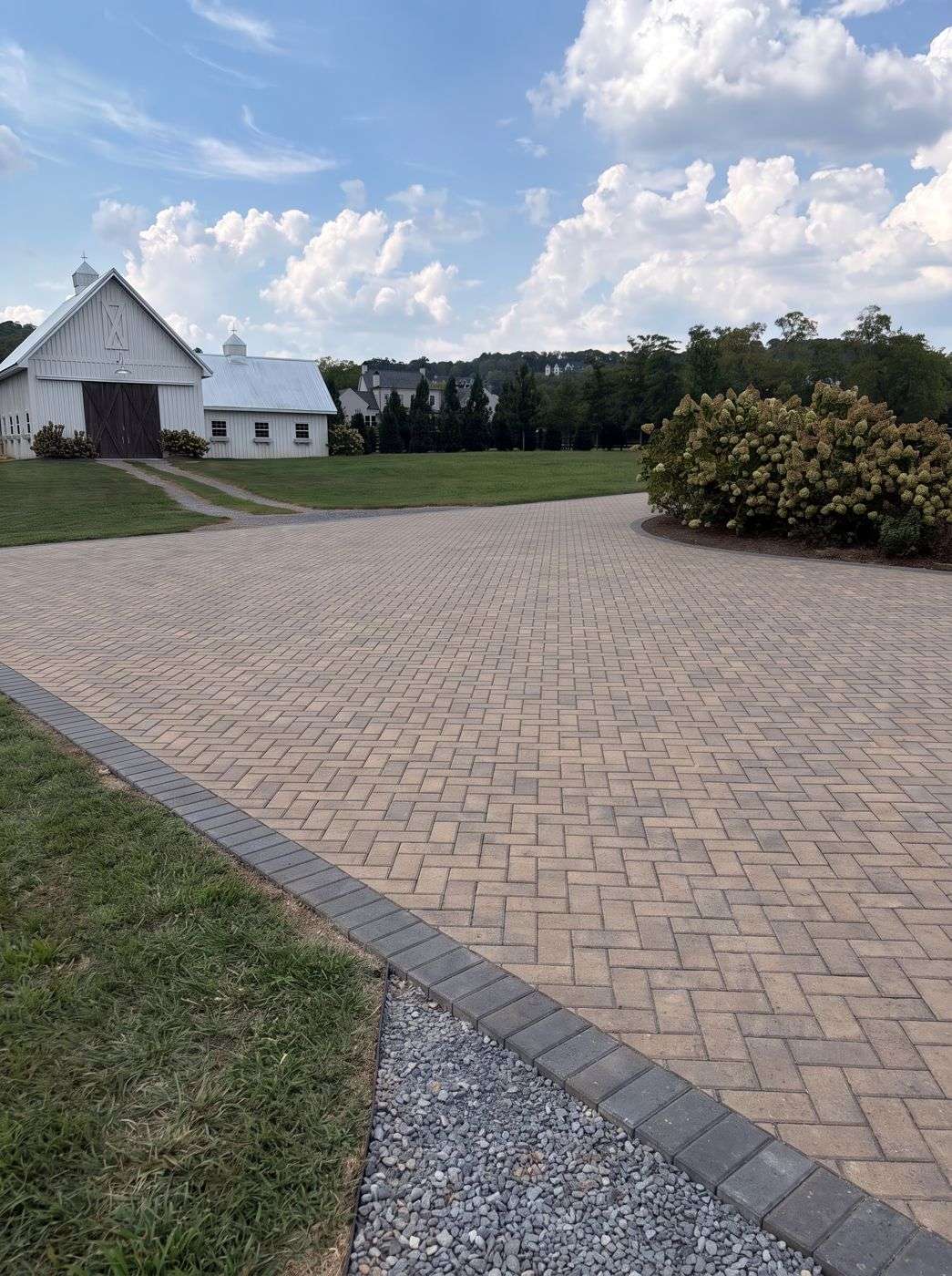
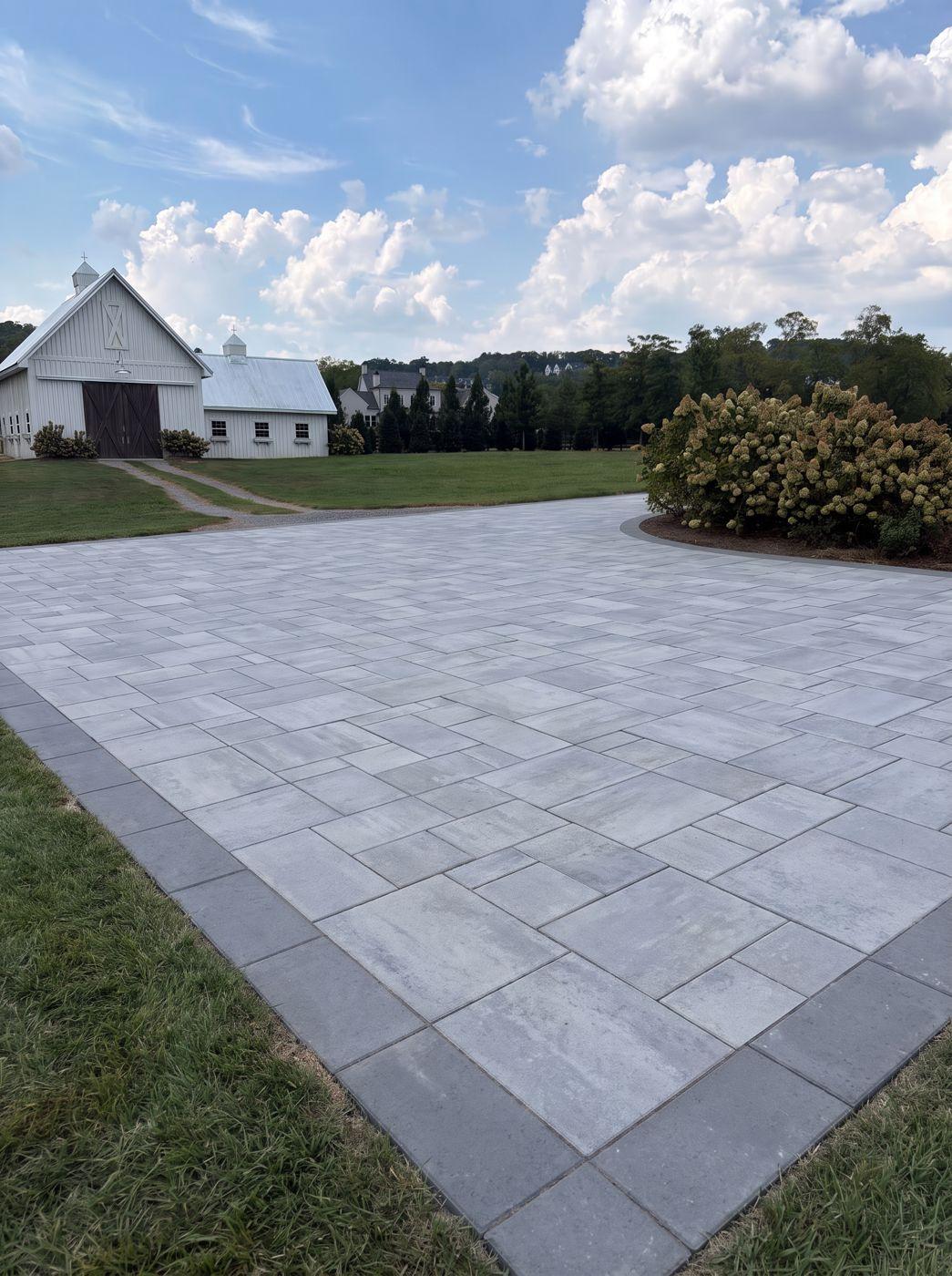
Keystone Holland Stone is the classic driveway paver: a 4″×8″ brick that interlocks in every direction when laid in herringbone, which is the pattern you want under tires. Techo-Bloc Blu 60 Smooth is the larger-format, cleaner-edged option — a smooth-faced slab laid in a random modular pattern that reads more contemporary against a white farmhouse. Same build underneath, different look; Blu runs meaningfully more per square foot than Holland. The homeowner’s call, made from real samples once the number is settled.
Concept renders
These are concepts generated from the homeowner’s own photos so the scale and the curve are real — they are not photographs of finished work. Blend, pattern and border get locked in before material is ordered.
How we build it
The full crew cut sheet for this system — layer stack, install steps, and the machine-sand and joint-sand quantities per 100 square feet — is the same one we hand the crew. Read the overlay build and the driveway build on our paver overlay page and our paver driveway installation page, and see what an overlay costs in our Nashville pricing guide. If you’re weighing a resin overlay instead, we compared the two.
Franklin, TN
This property sits in the horse-farm side of Franklin — four-board fence, long drives, houses set well back from the road — where driveways run big and the freeze-thaw cracking shows up early on concrete that gets sun on one end and shade on the other. We’ve done patio and hardscape work across Franklin and driveway overlays throughout Williamson County; we point clients to a neighborhood-wide overlay job nearby so they can see every kind of driveway transition in person.
Thinking about the same thing for your driveway? Call (615) 356-0139 or request a free quote. We come out, shoot the grade, and tell you straight whether an overlay is the right call.